
00 Entering the Valley
Two weeks of bliss in Yosemite — the Valley — interrupted only by intermittent rain which (fortunately and unfortunately) forced some rest days and one epic. The trip was shorter than I initially planned, but I managed to get on some of the easy classics and only fall victim to the Yosemite sandbaggery a few times.
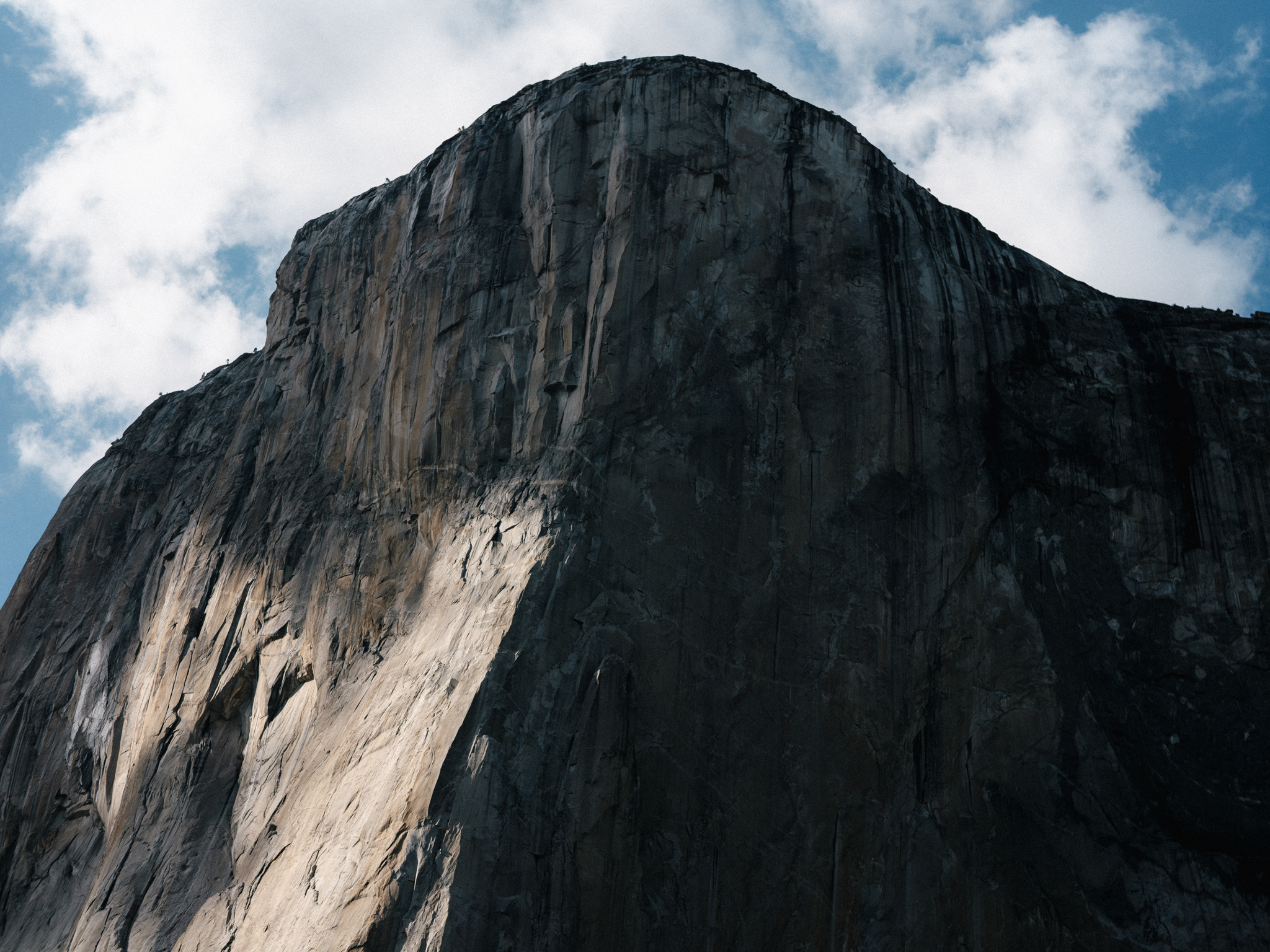
It’s an overdone cliché at this point, but entering the Valley for the first time really felt like a mind-altering moment — seeing the near-endless possibilities for lines on sheer faces and being overwhelmed by the realization that one would have to spend years upon years climbing there to even experience a fraction of the possible climbs. For the free-climbs listed in the 2025 edition of the Sloan Yosemite guidebook, there are 192 routes listed at a grade of 5.9 and under — and another 558 routes which combine to be the 750 “best” climbs in Yosemite. In the roughly 2 weeks I spent in Yosemite, I managed to climb ~50 guidebook pitches across ~20 routes. At this rate, I’d need to spend at least a full 1.4 years of my life in Yosemite to climb every route in the Sloan guidebook (not even counting aid routes or the fact that 47 of the 750 routes are at a grade of 5.13 or higher — including the Dawn Wall). That is all to say that Yosemite contains such an immense amount of climbing that I doubt many people can say that they have run out of climbing to do there. I’m incredibly fortunate to have experienced Yosemite, albeit a very small fraction of it, and am pretty certain that I will be returning.
On April 14th, I entered Yosemite National Park from Wawona. It all seemed quite unassuming until I reached Tunnel View where in the distance, El Capitan and Half Dome stood with the Valley floor being carved out between the two behemoths. It’s the classic establishing wide shot used in Valley Uprising and pretty much every Yosemite climbing movie — rightfully so.
01 Baby steps
It seems that I unintentionally timed my visit well as mid-April is still the early season for climbers and more importantly, tourists. Some of the rock was still quite wet, but there was still plenty to be climbed and the crowds had not yet amassed due to the weather. I spent my first full day in Yosemite with a family member, Jon, who lives in LA. He has been climbing for longer than I have, but had never done any trad climbing let alone multipitch climbing. I’ve always looked up to him as a bit of an uncle-figure so it was a little bit of a role-swap where I became the one showing him the literal and metaphorical ropes. I was psyched to spend some time with him and share the experience of climbing our first Valley routes together.
We started out at Swan Slabs where I taught Jon how to lead belay. We got on Hanging Flake (5.6) and Grant’s Crack (5.9). I ended up one-hanging Grant’s Crack, getting a little bit of tunnel vision and making the finger crack far more difficult than necessary. It felt like a successful introduction to the granite, and for Jon, an introduction to cleaning gear. Feeling good with Jon’s belaying and perhaps an inflated sense of confidence that I wouldn’t get too sandbagged, we set out to climb Munginella (5.6, 3p). Upon arriving at the base of the climb, we found three parties there, racking up to begin the climb. Not wanting to wait, we decided to pivot to Commitment (5.9, 3p) which was nearby and had no queue — it was also a classic in its own right.
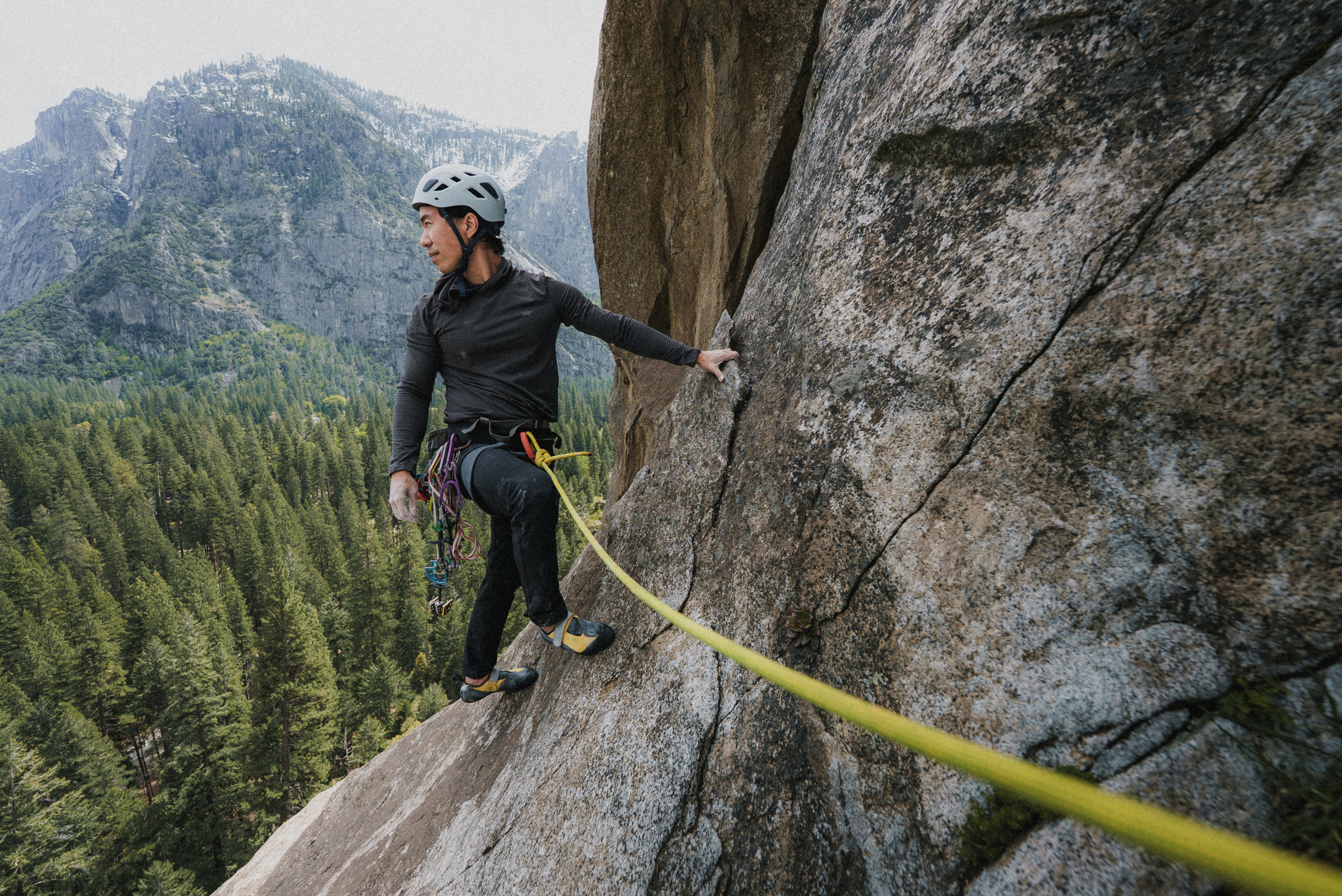
The first pitch of Commitment was a splitter 5.8 hand crack which ate up #1 Camalots. I wisely placed both of my #1’s in the first 20 feet of the pitch and spent the remainder of the pitch wishing that different life choices were made. Pitch two led me up to the base of roof which felt very reminiscent of the Gunks climbing that I was quite familiar with. The third and final pitch was incredibly fun with a memorable roof traverse to a corner system that ended in an interesting top out. I was incredibly excited to finally be out in Yosemite and climbing granite with some great views. Jon did a great job on his first multipitch and stayed quite composed despite being pretty far off the deck. Suffice it to say that we celebrated our successful day out that night.
02 Nutcracker and Higher Cathedral Spire
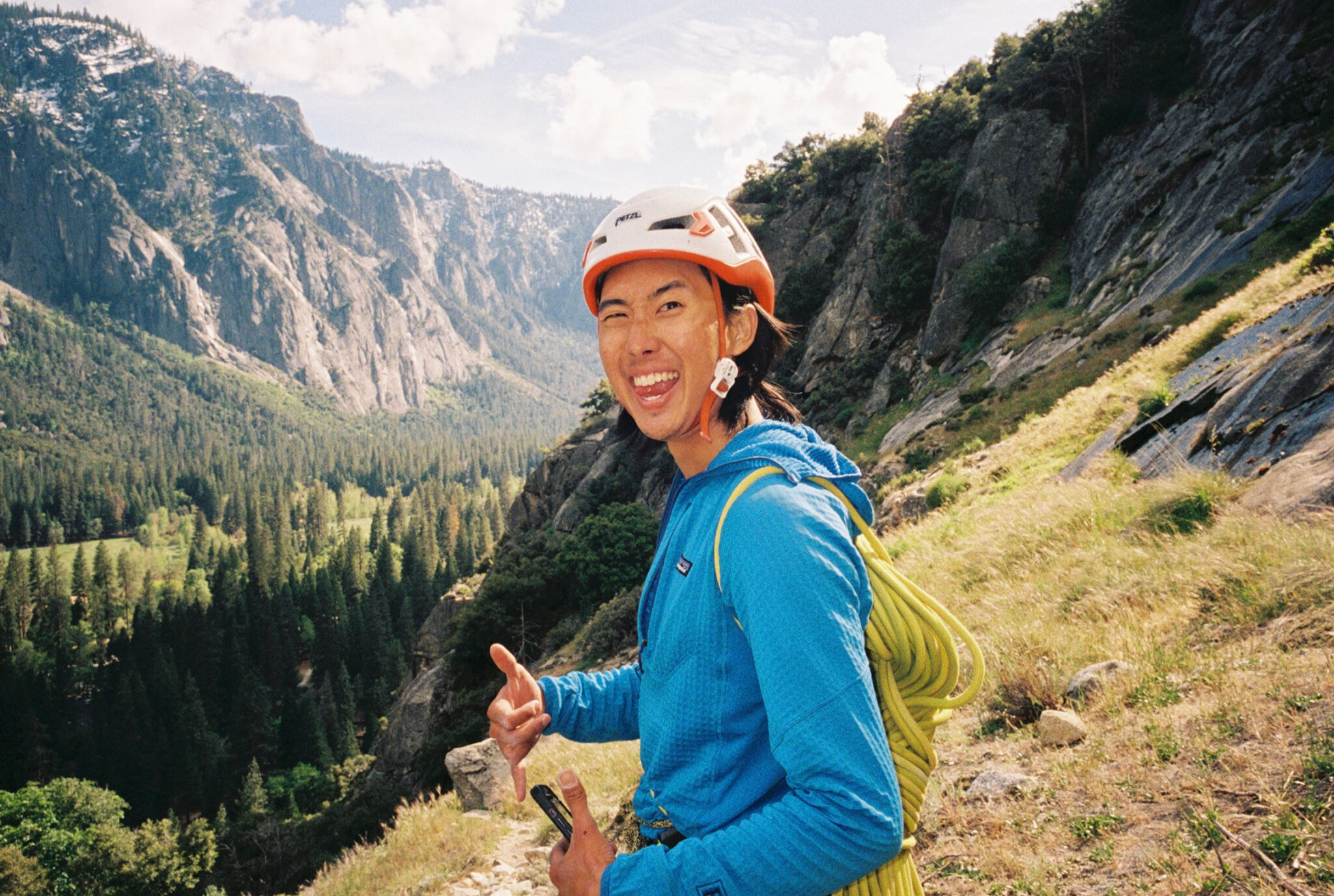
A few days after climbing with Jon, I connected with a mutual friend, Tom (thanks Sam!). Tom had just moved into El Portal for the summer and he was stoked to get on pretty much anything. We got on the absolute classic, Nutcracker (5.8, 5p), and did the 5.9 start variation. Although this was the first route to be climbed using nuts for protection, I was quite happy to have some modern cams to protect the climb. Tom and I took our time on the climb and spent a bit of time waiting on a party ahead of us yet it still only took us 4.5 hours car-to-car. I got to lead the last pitch which has an infamous ankle-breaking mantle; however, it felt quite manageable (I’m told that the mantle can feel much harder and scarier if you are vertically-challenged). The crux for me was probably the third pitch which had quite a bit of seepage from the recent rain — I also dropped my nuts midway through which were fortunately retrieved by Tom.
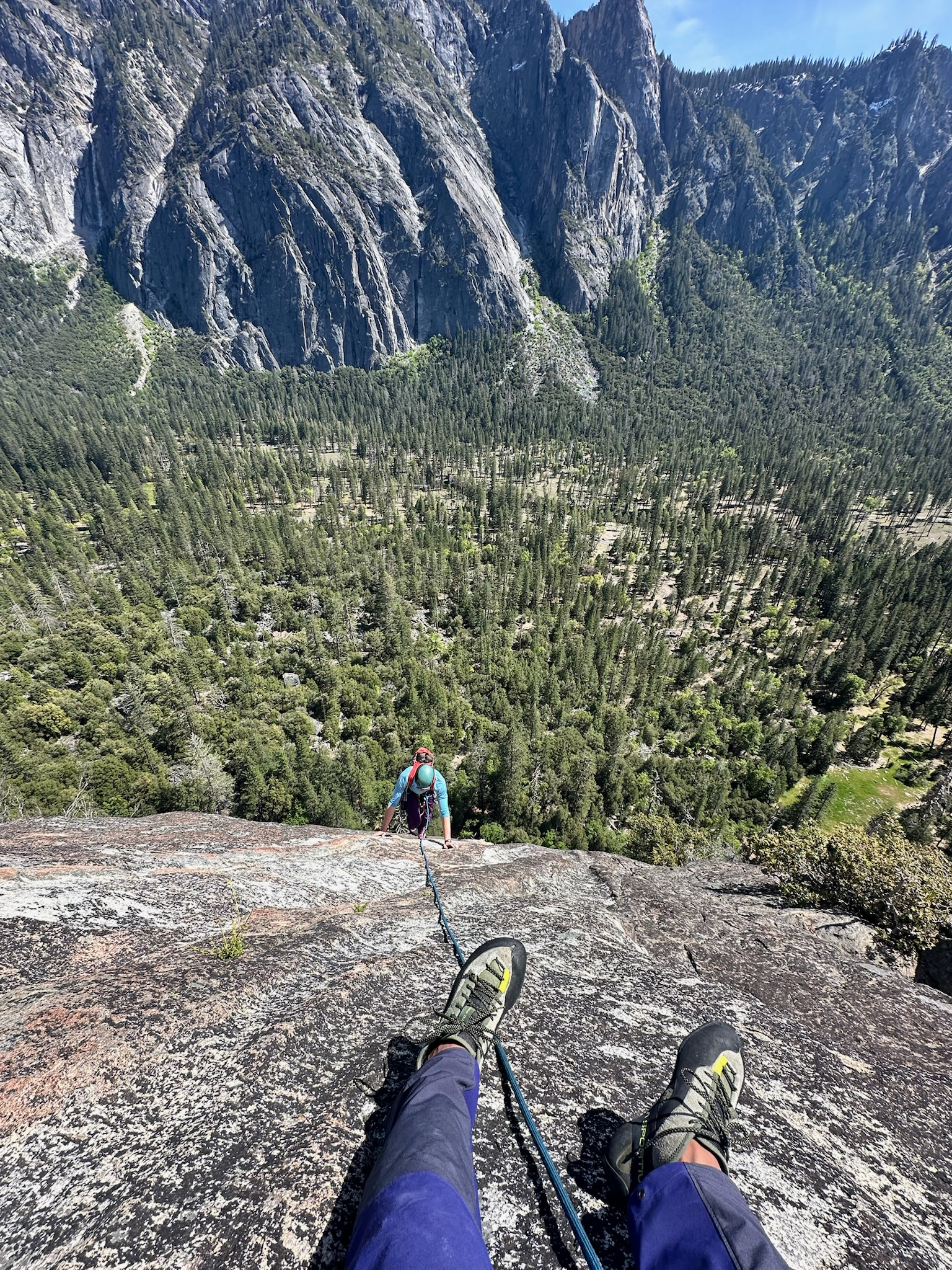
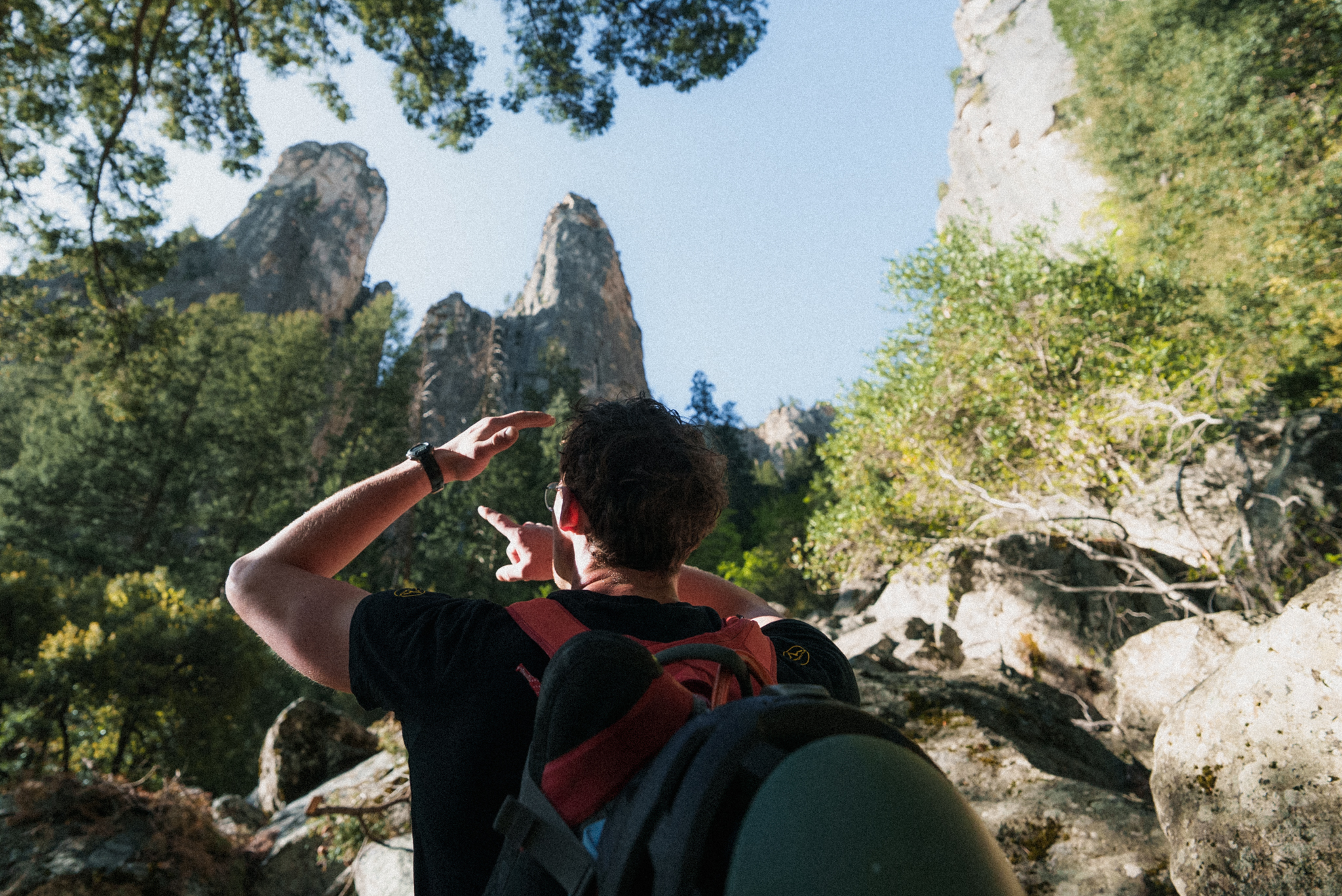
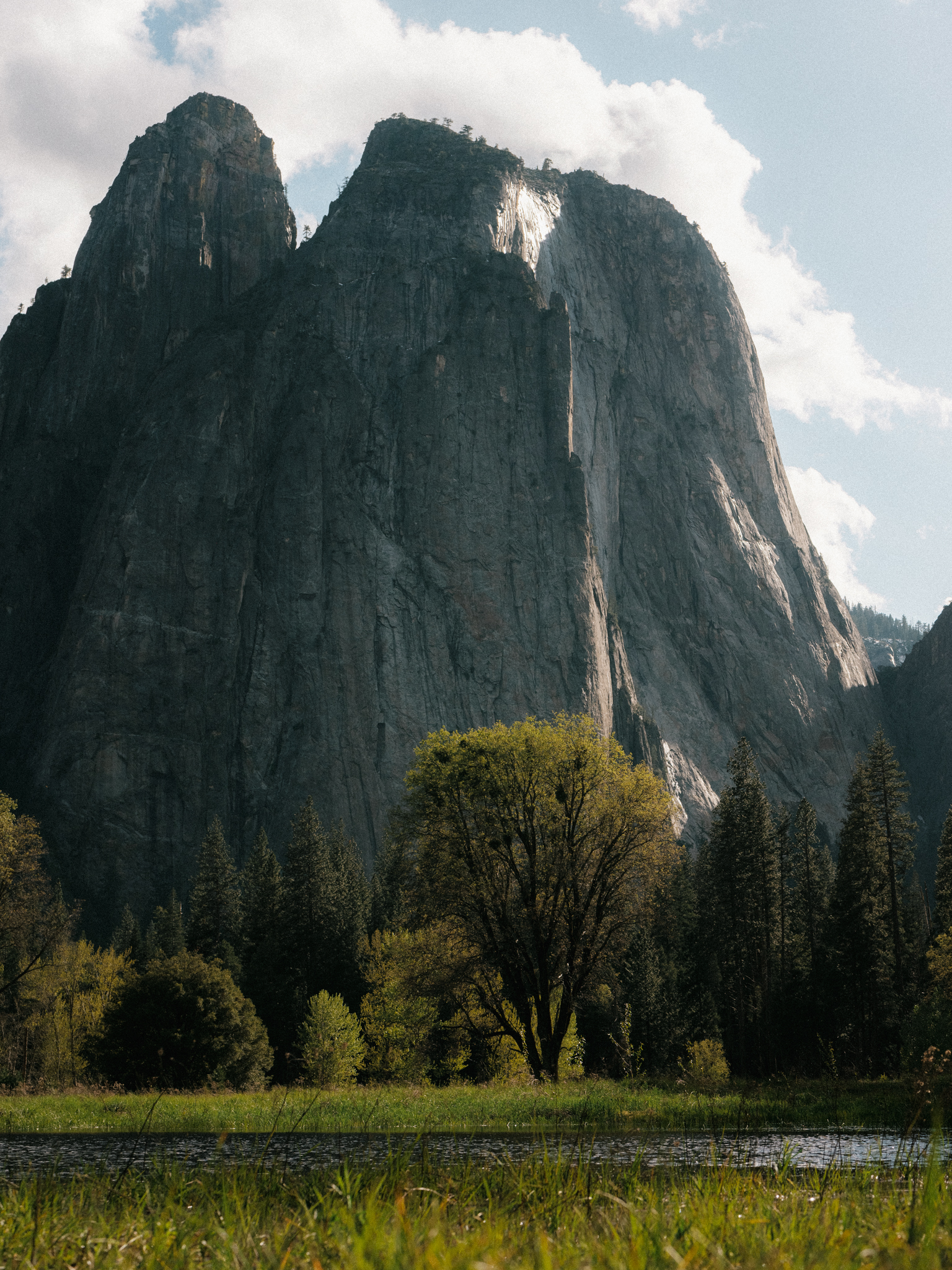
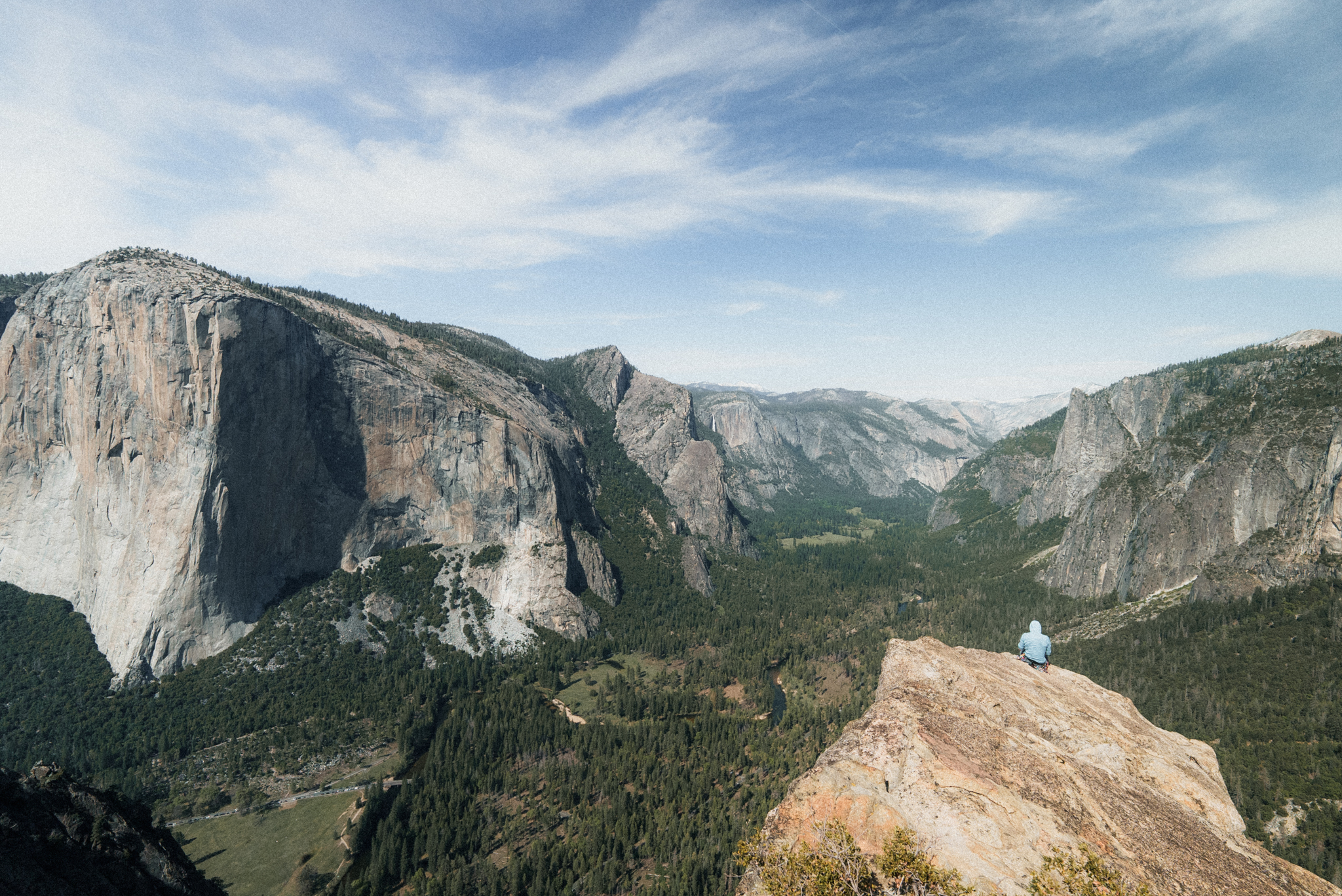
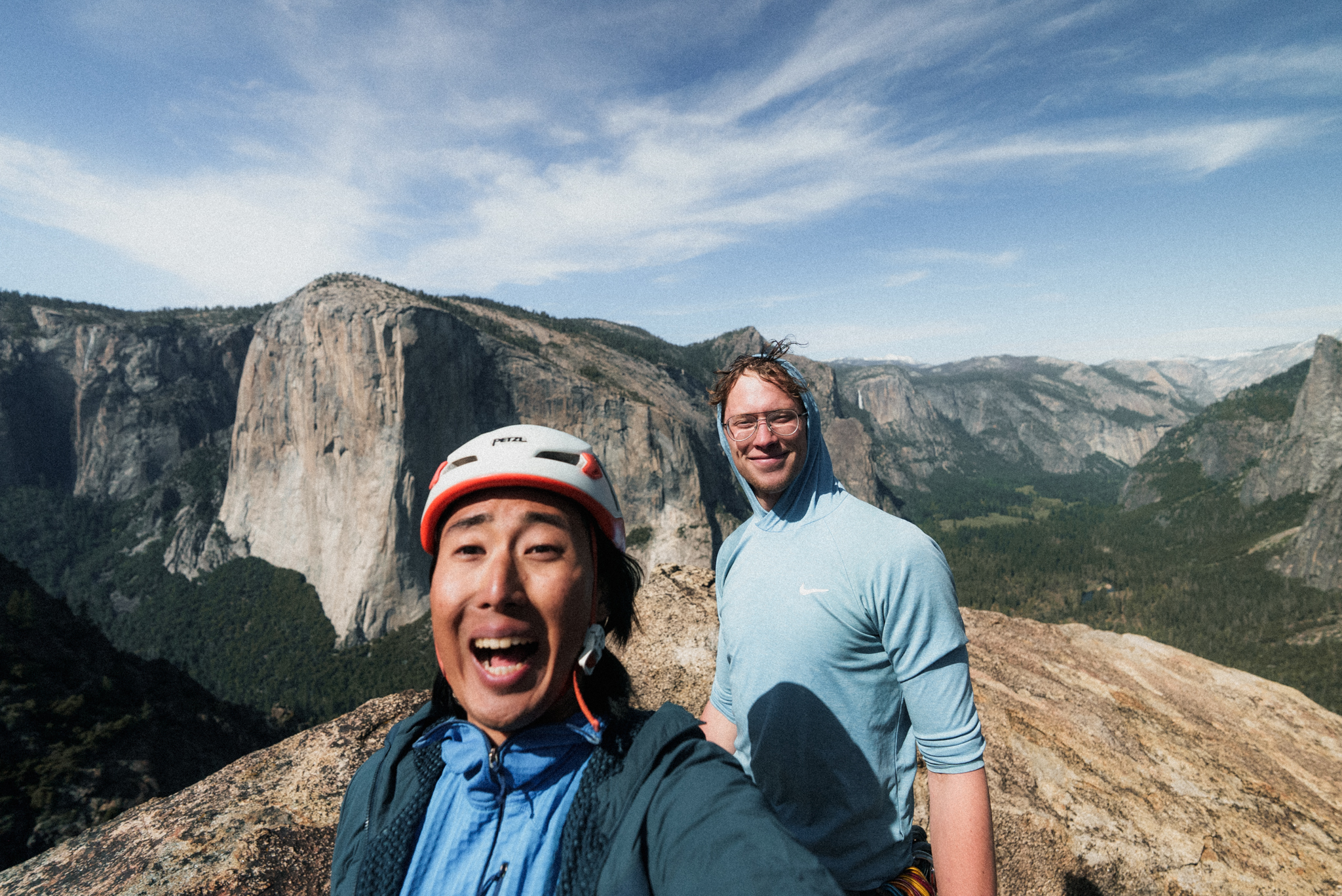
The next day, Tom and I set our eyes on the Regular Route of Higher Cathedral Spire (5.9++, 4p). There was a moderately long approach, followed by some shenanigans. I have to admit at this point that my topo-reading skills leave a lot to be desired. After Tom aided up the majorly sandbagged 5.9++ fingers variation of pitch 2, I led us a bit off-route to a tree with a rap ring, but too far climber’s right. I was pretty demoralized at this point, having run out the climb to the tree and getting off-route. Tom led a fairly heinous traverse leading to the top of pitch 4 (I believe), then took the last 5.9 pitch to the top. Without him, I probably would have made the decision to bail and leave Higher Cathedral Spire for another day. The top-out was absolutely stunning with a great view of El Capitan and the Valley. Part of me wished that we would be able to free the route, but it was a humbling experience that demonstrated that not all 5.9s in the Valley are the same. Car-to-car, this little adventure took us a tad over 9 hours. Remember, the “+” on a grade carries a lot of weight — even more so when there are two +’s.
03 Yosemite cragging
Although Yosemite is famed for its multipitch climbing, I was surprised to discover that there is also some high-quality single pitch cragging to be done — with even a crag that’s completely bolted. During my time there, I got out to Sentinel Creek, Cookie Cliff, and Mecca.
In my first couple days in Yosemite, I got out to Sentinel Creek with another mutual friend, Michael. Being a late afternoon meetup, we only got on Hari-Kiri (5.10a) and Brownoser (5.8) which I followed and led respectively. Hari-Kiri felt like a pretty welcoming introduction to the 5.10 grade and with that, the seed was planted that perhaps this could be my first 5.10 lead in the Valley.
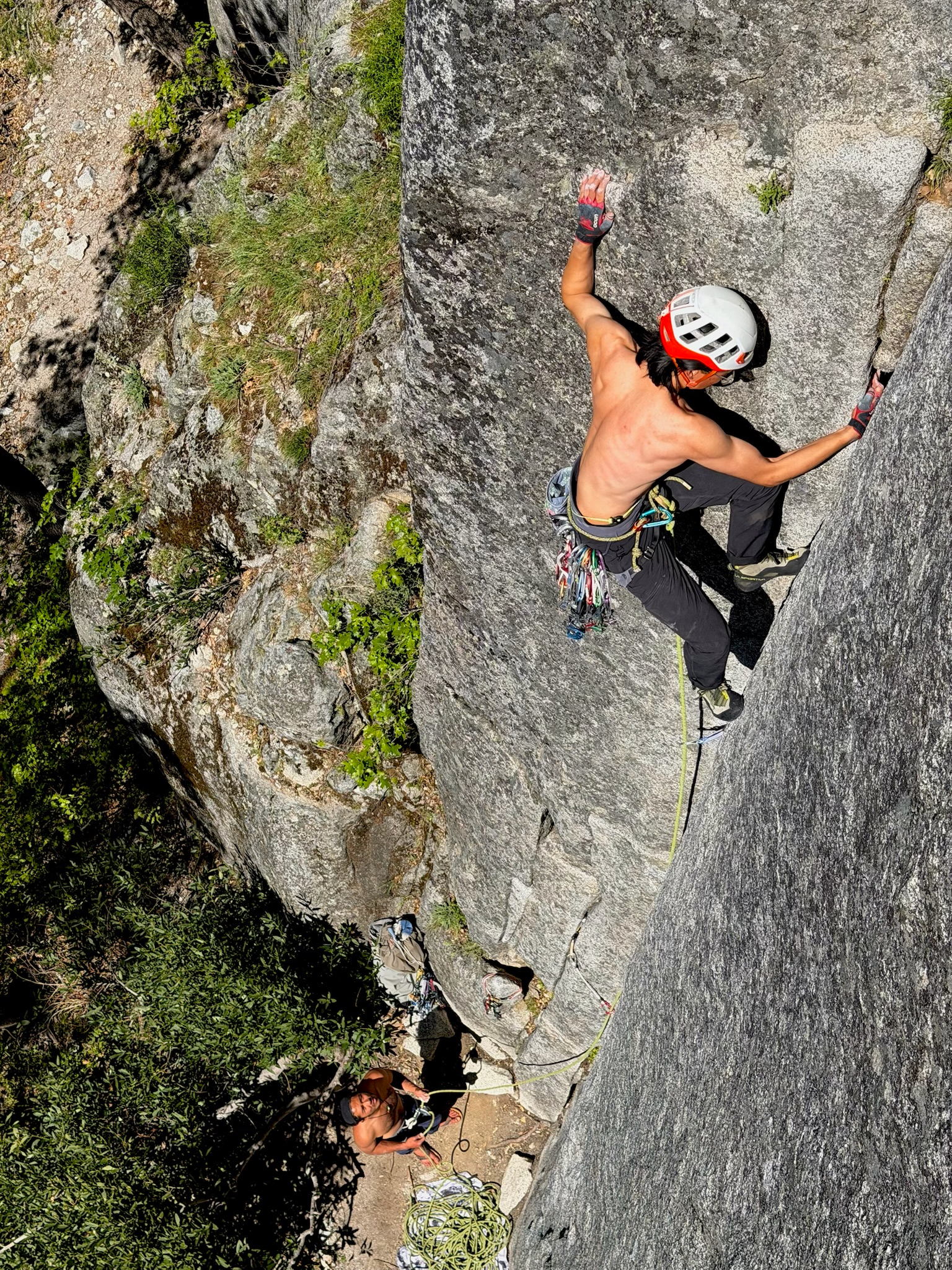
A few days later with a few more Yosemite climbs under my belt and a few more new friends, I returned to Sentinel Creek with Michael, Jonathan, and AC. Feeling pretty confident, I decided to give Hari-Kiri a redpoint attempt. The route had some very nice, sustained movement with crack sizes varying from fingers to hands. Fortunately, it also had some nice ledges to rest in-between longer sequences. About halfway up, I ended up getting into an awkward position where the right side of my body was in a right-facing corner, preventing me from making secure upward progress. As a result, I ended up taking up on the rope to reposition my body, then climbed to the chains. I was a little frustrated that I had to weight the rope to reposition as I had no such issues the previous day when I climbed the rope on toprope. Afterwards, I toproped a few other routes nearby at the crag then watched Jonathan redpoint Hari-Kiri. After he got to the top and cleaned the route, I ended up firing it off and redpointed the route on my second attempt.
After climbing at Sentinel Creek, I linked up with Max, a climber I met back in Indian Creek. He arrived during a period of rain, but after a couple days, the rain let up and we went to Cookie Cliff to do a little bit of cragging. Max put up a few 10s and 11s which I happily followed and cleaned. I even took a crack at leading the first pitch of Meat Grinder which goes at 5.9. The route felt pretty slippery with some thuggy jams and so I ended up hanging on the rope a little. Despite this, it was a great day out with some quality weather and surprisingly quality rock despite the recent rainfall. There was a general consensus though that we were here in Yosemite to climb some bigger routes — cragging was great and all, but Yosemite has a lot more to offer than just single-pitch routes.
04 What the hail
In preparation for a longer day out, Max and I decided to link Into the Wild (5.10c, 4p) with Yose University (5.9+, 3p). We got off to a rather late start and on the approach somehow completely missed a bear that was sighted by some climbers near the start of our route. Into the Wild is given a 5.9 A0 grade due to the bolt ladder on a short slab section; however, when freed like what Max did, it goes at 5.10c. I made a few attempts on the crux pitch, but ultimately ended up pulling on a bolt. The rest of the climbing went really smoothly and we found ourselves at the top of Yose University. The climbing, aside from the slab pitch, felt really cruiser and it ended up taking us around 3-4 hours to get to the top and descend. We then decided to set our eyes on Royal Arches (5.7 A0, 16p), but pursuit of this route was interrupted by some rain so we spent half a day cragging at Mecca, the only bolted crag in Yosemite, until we got rained out.
After a few days of letting the Valley dry out involving an incomplete watching of the Lord of the Rings: Fellowship of the Ring Extended Edition, Max and I started up the trailhead to Royal Arches. Despite getting to the base of the route a little after 9 a.m., there was only a party of two ahead of us and just getting started. We opted to go up a variation that started climber’s right in hopes of getting ahead of the other party — they also told us that we could pass them at the base of the climb. Max led the first pitch, I followed, and we ended up passing the other party on the ledge traverse. The next 15 pitches went rather smoothly. We linked a few pitches, only had to pseudo-simul-climb one pitch, and made gratuitous use of the rope swing on the pendulum pitch. The cruxes of the route were the pendulum pitch, the moves right after the pendulum pitch, and the last pitch traversing into the woods. Since it was still early season, there was still a healthy amount of running water on these sections which added to the spice of the route — at the very least, it made the climbing a tad more engaging.
Max and I were making fairly good time on the route, topping it out just under 5 hours. Just before starting up the final few pitches, Max suggested the possibility that we add on the South Face Route (5.8, 7p) of North Dome. It required a little bit of a hike from the top of Royal Arches but was supposedly an underrated route. I felt psyched so we went past the rappel station on Royal Arches and journeyed up the slab-filled approach to North Dome.
As we made the approach, we saw a few ominous clouds in the distance above Half Dome, but decided to proceed while monitoring the clouds. At the base of the South Face Route, the rain clouds seemed to be holding off and still in the distance so Max went up the first pitch and belayed me up. I took the “mantle” pitch and went up a crack system looking for a set of bushes that supposedly denoted the belay. There was some small root-like vegetation near the supposed belay spot so I built a gear anchor there and brought Max up. The clouds seemed to be nearing, yet there was still no rain.
Our luck ran out as Max went up the third pitch with an accompanying light drizzle. We thought that we might be able to wait out the rain and keep going once it stopped, but that quickly became woefully optimistic as the rain started to pick up and transition into a full on hail storm. As Max downclimbed the slick granite, pebble-sized hail was falling. When Max got back down to the belay station, we were in full-on bail mode figuring out the safest way to bail while also not leaving all of our gear on the mountain. Unfortunately, the closest anchor with pre-existing gear was a tree anchor over 40m below. We improvised a system where I lowered Max to the tree anchor; as he descended, he placed gear to protect me on my subsequent descent. I lowered off a sling girth-hitched on the “small root-like vegetation” and friction-hitched myself to the other side of the rope so that if the anchor failed, I would only fall the distance to the next piece of gear placed by Max. This was far from ideal, but the safest way to descend without leaving behind all of our gear.
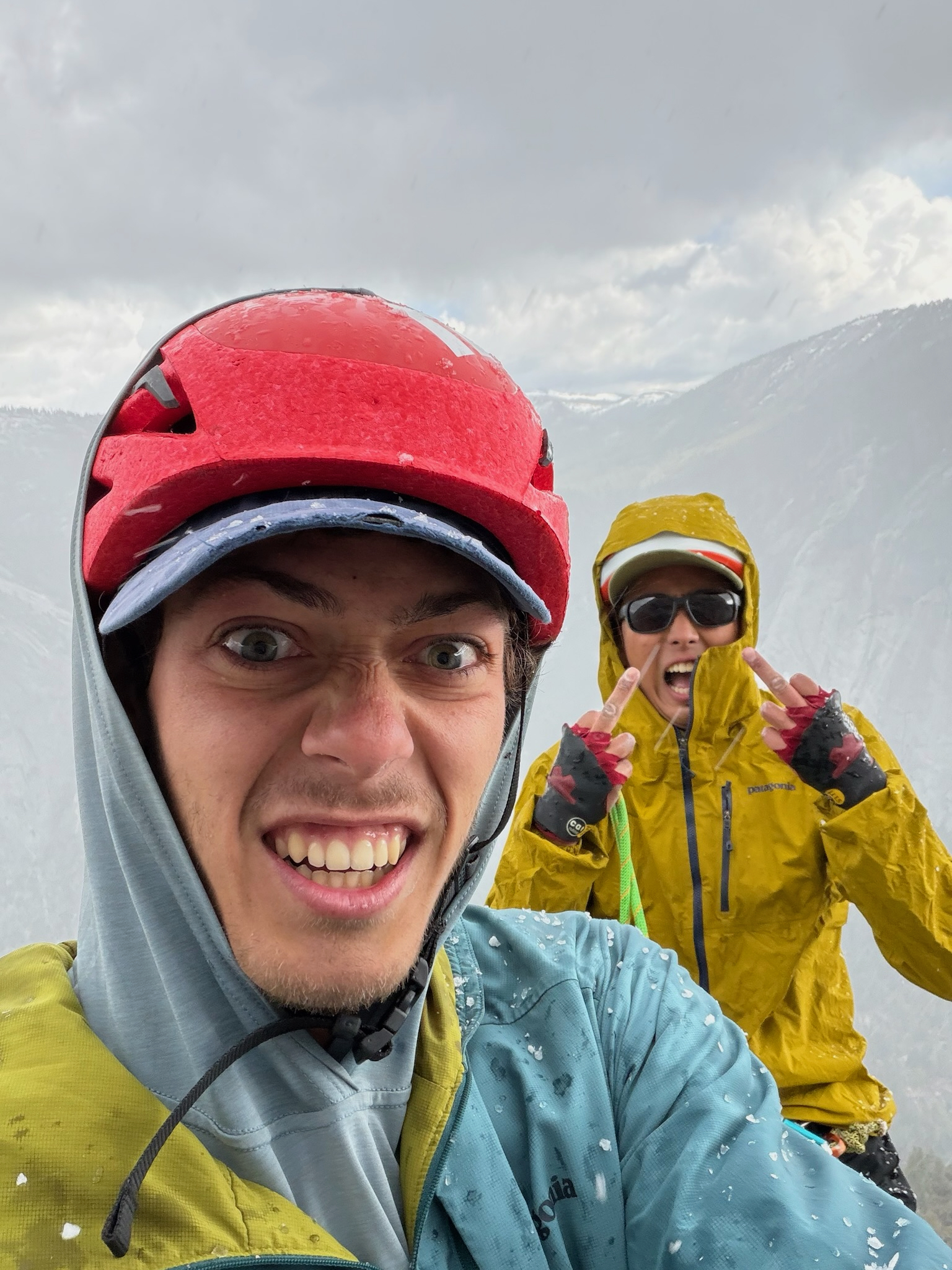
Eventually we made it to the tree anchor soaked but in relatively good spirits considering the circumstances. Fortunately, the rain and hail had let up so Max and I rappelled down to the base of the route and began down the slick slab approach towards the top of Royal Arches. This required some careful descending as the bare granite was steep and exposed enough that a fall would be quite consequential. We did make it down to a tree with fixed gear above the rappel station on Royal Arches and started the long descent to the ground. It was a bit after 7 p.m. when we started to rappel down, so inevitably we were benighted on the Royal Arches rappel.
Fortunately, the rappels went very quickly. There was minimal route-finding and we managed to minimize the transition time in-between rappels. We eventually got to the base of Royal Arches over 12 hours after we started up the route. It was certainly not the experience we expected to have, but a reminder to check the forecast beforehand and be wary of certain suspicious clouds.
As we were rappelling, the thought of a large pizza from the Curry Village Pizza Deck motivated us to keep moving. The Pizza Deck closes at 10 p.m. so we had a strict cutoff time in which failure to arrive would risk a very likely cold, unappetizing dinner. The thought of pizza was so on our mind that we even devised a contingency plan involving a fellow climber on the ground ordering for us so that we could still enjoy a pizza if we arrived late. With our efficient transitions and relative lack of route-finding, we were able to make it to the ground a little after 9 p.m., giving us plenty of buffer to make it to the Pizza Deck on time. Max and I devoured a large pesto chicken pizza, relishing in the warmth of the cafeteria.
Royal Arches (and part of the South Face of North Dome) was my last adventure in Yosemite. The next day, I made the decision to pack up and head towards the High Sierra for a little mountain adventure. My skin was absolutely wrecked from all the climbing done in Yosemite so I was in no condition to climb rock anyways. Tired, sore, and battered from our most recent epic, I left Yosemite content with the climbing done, but already planning a return.
05 Some housekeeping
If you’ve managed to make it this far, I should congratulate you on your attention-span. I haven’t been completely sure on what to include or exclude from these write-ups and am still trying to figure that out. At the very least, this’ll be a good reference for me in the future when I return to some of these places or reminisce on the adventures I’ve had.
Some of you might have noticed that I’ve reworked the website a little bit to make the blog posts a bit easier to find while also adding a section to order some prints. I’m using a professional printing service that I’ve relied on for years — all prints will be on really high-quality, archival paper. If you feel so inclined to order a print, I’ll be in touch as soon as possible to arrange the logistics. Secondly, if there is a photo you’ve seen on a previous blog post that doesn’t seem to be on the prints page, reach out and we can see about figuring something out.
To the probably three people out there reading this, thank you.
Leave a Reply