
00 Concluding a productive (and abbreviated) Hyalite season
After leaving Ouray, Colorado in late February, I headed towards Bozeman for my last scheduled commitment — a graduate school recruiting visit. The following month of March was then spent in Bozeman with the exception of a short trip to Utah. No commitments. No plans. Just the goal to get better, try hard, and maybe make some new friends.
I feel rather content with how this past month unfolded and feel incredibly fulfilled by the experiences I had, the connections I made, and the climbing I was able to accomplish.
Prior to arriving in Bozeman, my hardest drytooling redpoint grade was D7 — on the route Panama Canal, which I onsighted in December. For reference, D7 or M7 roughly corresponds to the difficulty of a 5.11 rock climb which I unfortunately cannot verify, as I have not yet led 5.11! By the end of the month, I had successfully redpointed Straits of Gibraltar (D9-10), The Heretic Anthem (D9-10?), and Northwest Passage (D11). To have climbed just Straits of Gibraltar would have made my entire month in Bozeman worth it considering that I was unable to pull the crux moves on the route back in December.
Numbers and grades aside, the progress I made with one month of dedicated training in Bingo Cave and the Mountain Project far surpassed my expectations. This month was — what I consider — a worthy introduction to “hard” drytooling. It would not have been possible without the incredible beta, encouragement, and belays from the Bozeman drytooling community. I have to shoutout Sam Galindau, a Bozeman climber I met outside a Family Dollar in Munising, Michigan during the Michigan Ice Fest. Sam was able to share the stoke in projecting Straits and Northwest together; he also singlehandedly introduced me to nearly every climber I now know in Bozeman.
In one month, I learned how to project, properly tape my tools (including the pommels!), and climb through discomfort. This feels like the tip of the iceberg as there are far more ways in which I think I can optimize and improve upon my climbing technique to climb and project more efficiently. I still feel quite awkward when drytooling — especially in roofs! — and think that I have room for improving my physical strength and endurance. A future goal of mine would be to design and follow a structured and periodized training plan to get after more of the testpieces in Bingo Cave this winter.
01 Northwest Passage
The natural progression after climbing Straits of Gibraltar is to get on Northwest Passage. The route is very similar to Straits — vertical entry along two vertical cracks, a roof section, and a pumpy headwall — the major deviation being a longer, more sustained roof section. If done with figure-fours and -nines (Yaniro style), at least three are required for the sequence. I first tried this route in December, but managed to only get to the beginning of the roof. This time around, I got out with Ben Farrell who, in December, redpointed the route. I gratefully accepted all of the beta he had to offer on the route.
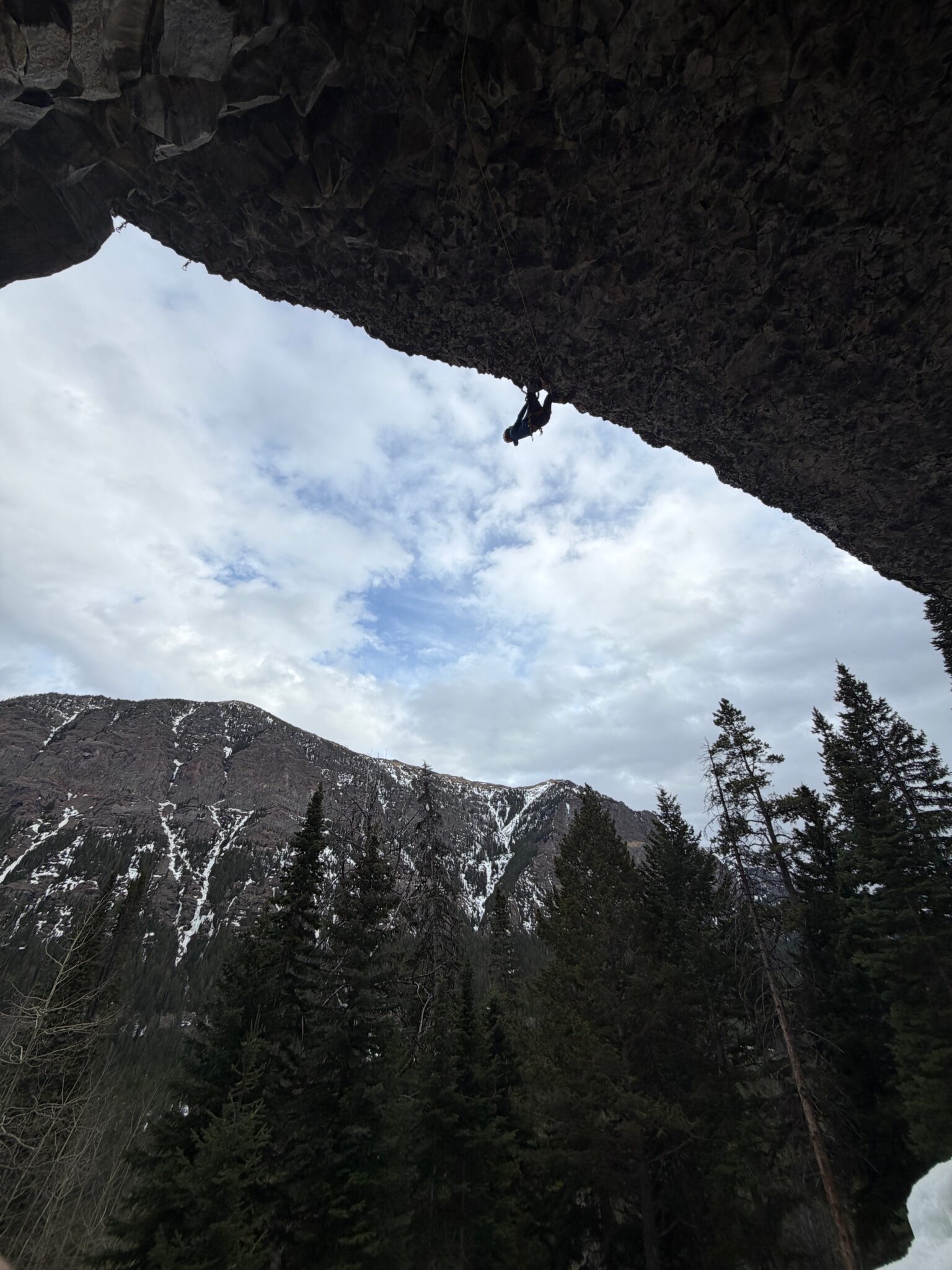
Near the lip of Northwest Passage. Photo credit: Ben Farrell
The entry climbing to the roof was far more straightforward and secure than Straits. At the roof were two vertical seams that led to a big stein pull that relied on a tool-specific placement. Clipping two draws at the roof, I went into a figure-four onto the stein with my right foot. Being the silly individual that I was, I had one drytool-specific crampon with no secondary points on my left boot and a mixed crampon with secondary points on my right boot. This mismatch was largely due to a stripped bolt connecting to the frontpoint of my mixed bolt-on crampon. Although I had done nearly all of my past drytooling in the mixed bolt-on crampons, it was quite evident that the secondary points impeded my ability to precisely place my frontpoints on certain edges and cracks. Furthermore, the secondary points and rakes were getting caught on the rope whenever I went into a figure-four or -nine. A figure-four with my right foot onto the stein was uncomfortable as my foot constantly got snagged with the rope — I would refine my beta in subsequent attempts.
Crampon snagging aside, going from the roof stein to the next hold involved a rather large move to a wide, sloped slot with my left tool. A figure-nine then -four resulted in the next move to either a v-slot or a farther slot with a larger range of pick engagement. After hitting the v-slot and transitioning to a figure-four, the next move required a big move to a pocket past the lip of the cave hidden by the next bolt. The difficulty of the individual moves eased off after pulling the lip and transitioning to climbing the headwall which was protected by precisely one bolt. After my session with Ben, I was relatively confident that I could pull each move in the roof in isolation — now time to link the moves up.
After a rest day, I went back up to Bingo Cave with Sam. I went bolt for bolt on the first attempt, trying to remember all of the moves and ensure that I was transitioning between holds efficiently. Even on this attempt, my crampons were getting snagged with the rope. After coming back down and resting for a little while, I made a redpoint attempt. I easily made it up the vertical face and with some effort, got my left tool into the stein. Two moves later, I found myself with a stuck tool, unable to free it as I had already committed to the next hold and had swung too far away to retrieve the stuck tool. I lowered, and due to time constraints, Sam and I headed back down to the parking lot.
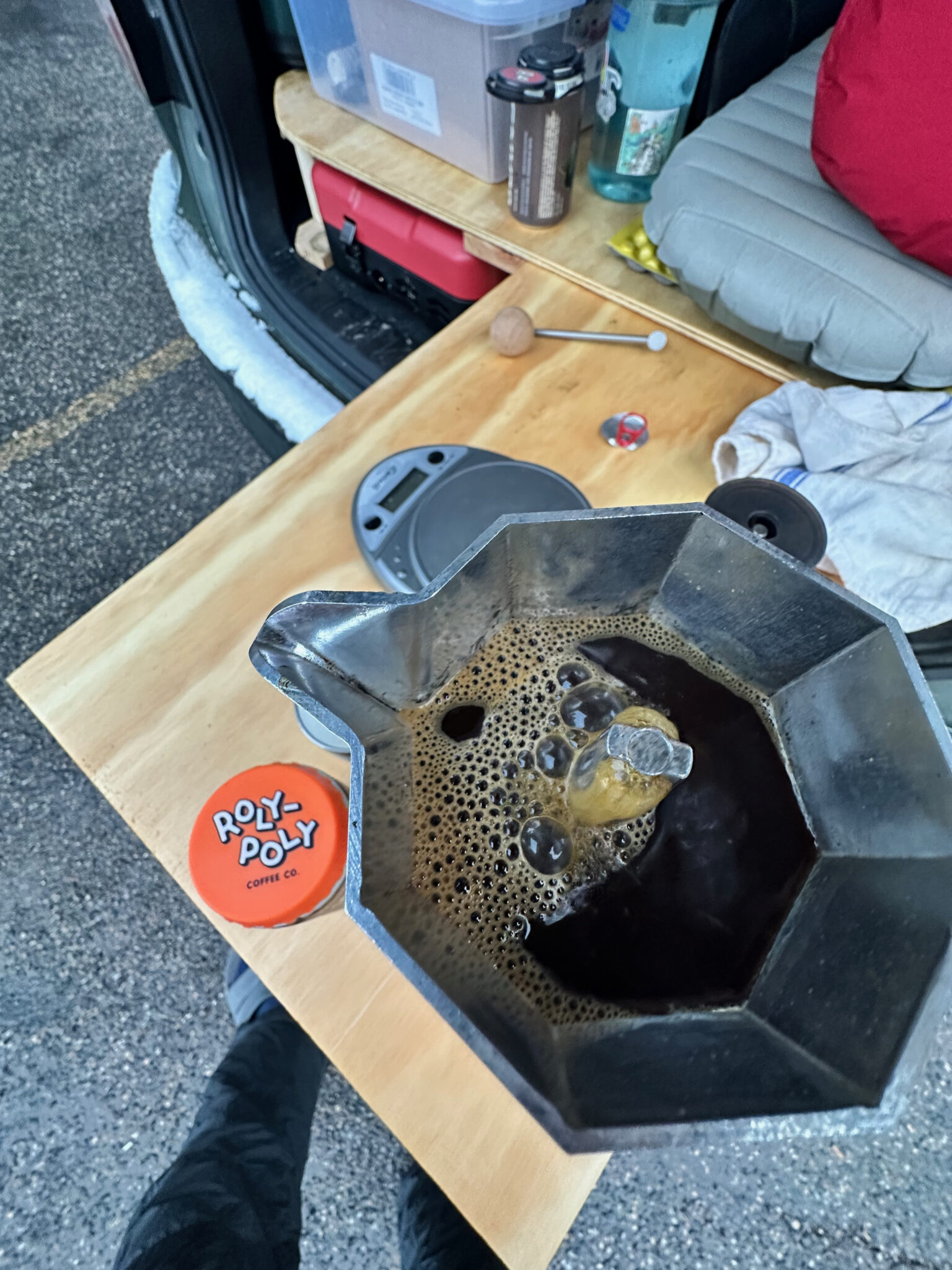
Proper sending conditions require caffeine (often multiple rounds).
Another rest day later, I returned to Bingo Cave on what would be my last day to get on Northwest Passage — I had plans to climb in Utah in two days due to a short weather window which would be followed by rain and possibly snow. I got out with Josh Mudge and a couple of his friends. Josh was working on Groggy on the Bering Strait (D13+) which conveniently shares the same start as Northwest Passage through two (or three) moves in the roof section. While making my first bolt for bolt run up the route, Josh suggested that I keep my feet on the wall (DTS style) past the initial stein in the roof and only go into a figure four once I hit the next move — it would avoid the awkward figure four in the stein and prevent the crampon snagging that I experienced previously. This beta made a huge difference for my next redpoint attempt in which I made it through the roof until a slight mistake which resulted in a tool stuck in the roof with my body too pumped and too far away to retrieve the tool.
Upon further reflection, I realized that I wasted a bit too much energy trying to play around with some new beta getting into the stein in the roof where I tried to engage the stein with my left tool. Realizing this error, I rested for a little while and then decided to go up to the first roof stein move and make sure that the sequence was effectively dialed. At this point, Josh had done a couple burns on Groggy and had made some substantial progress. He was ready to head out for the day, but I still wanted to give Northwest Passage one final attempt. Fortunately, we also had two other climbers at Bingo, Peter Bassine and Patrick Stelmach, visiting from California. Peter had just sent Straits of Gibraltar, and both he and Patrick were playing around on Northwest Passage. I bid adieu to Josh and his friends, staying with Peter and Patrick for one last attempt on my project.
Knowing that this would be my last attempt on Northwest Passage for a while, I made sure to rest. Hard deadlines can be great for creating a sense of urgency; however, they can just as easily overwhelm you and paralyze you with the prospect of failure. Part of me was at peace with the idea of not sending the route and leaving it for another day, but I also really wanted to send. After nearly three full sessions on the route, I had a pretty good understanding of all the moves up and through the roof. What I had not yet done was the final headwall which supposedly was substantially easier but was protected by only a single bolt.
Starting up, I felt quite good — the moves felt dialed and I felt like I floated through the roof. I was definitely pumped going through the roof, but it never reached a point where I felt myself slipping off the tools. After the final hard move, throwing for the hidden pocket past the bolt on the lip, I slowly pulled the lip and made sure that each pick placement was solid. I had surpassed the crux of the route and just needed to stay composed to the chains. To say that I took my time would be an understatement. Managing the pump in my forearms, keeping calm above the last bolt, and searching for good holds led to slow but upwards progress. Eventually, I made a high clip for the chains, struggling with the rope weight and drag. Then I made a couple more moves up to be more level with the chains and finally relaxed, weighting the rope and taking in the view of Hyalite Canyon.
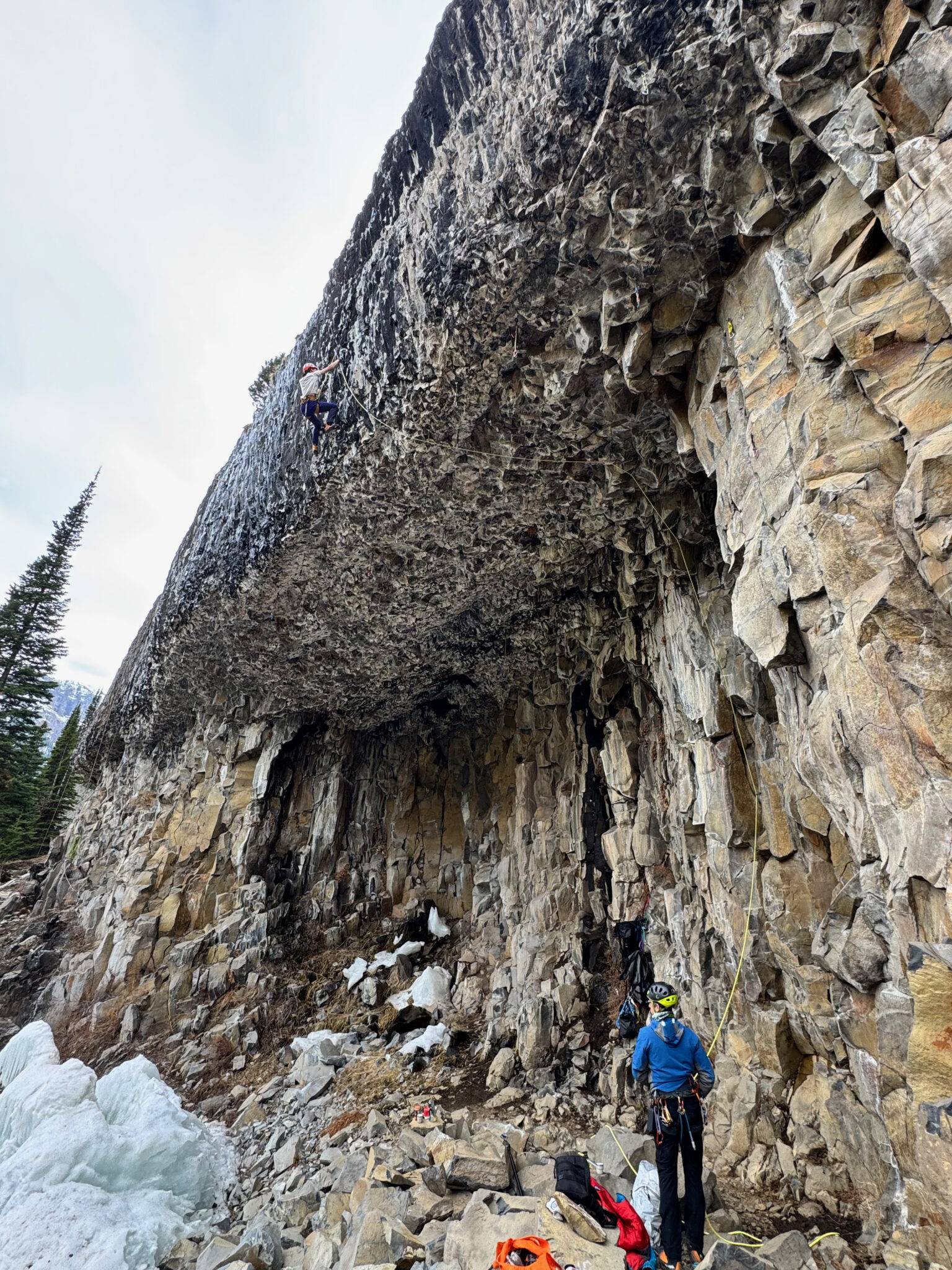
Pulling the final moves of Northwest Passage. Photo credit: Peter Bassine
A huge thanks to Patrick for the very patient belay. I’ll have to return the favor and visit him and Peter up in Lee Vining where I’m told there is some drytooling on granite.
It felt strange wrapping up my time in Bozeman. I really enjoyed my time there, met some incredible people, and managed to tick off some climbs that I had been dreaming of since December. Although I accomplished more than I initially set out to achieve, it felt like there was so much more I could do with a little bit more time. On the other hand, the few days I managed to get out on rock had me excited to move on and experience the climbing that the West has to offer. Before transitioning fully to rock climbing, I had just one more drytooling objective to try.
02 The Penitent Path
Located in the Wasatch range in Provo Canyon is a 12-pitch, M9 route called the Penitent Path. The first ascent was done by Sean McLane in 2024 and has only seen a few other clean ascents since. I started looking for partners a little after my brief trip to Salt Lake City in mid-March. In the last week of March, a potential partner ended up having to bail so in slight desperation, I put up a partner post on Mountain Project. Surprisingly enough, I got a response from Sean McLane, the first ascentionist, who said that he was game for a “fitness lap” on the route. I could not have asked for a better partner to have for an onsite attempt of the route.
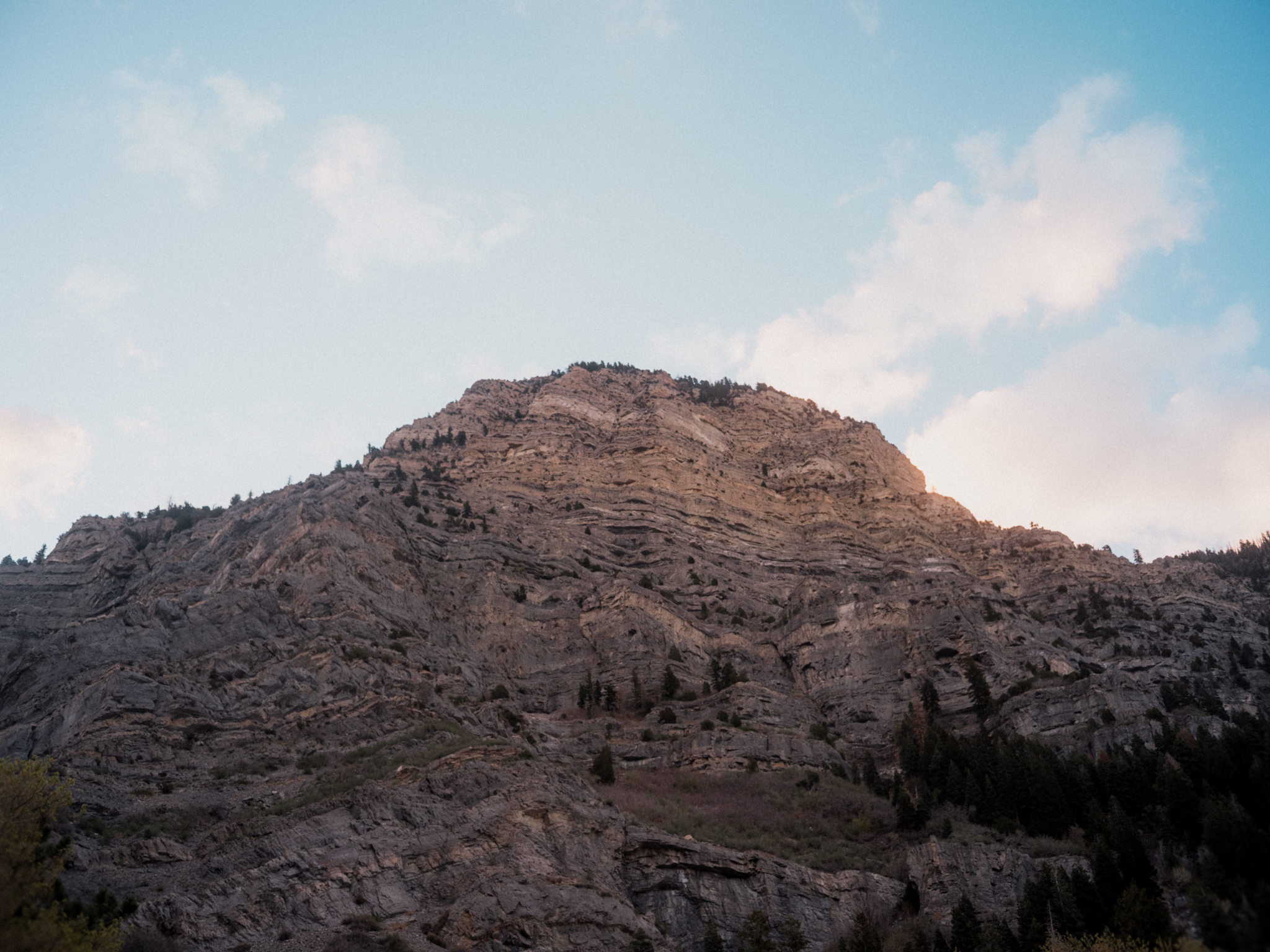
Provo Canyon in the early morning.
After climbing Northwest Passage on a Saturday, I drove down to Provo Canyon on Sunday, and met Sean at the trailhead on Monday morning. A chossy approach up some scree led us to the first pitch of the Penitent Path. “The climbing only gets better,” Sean said and he was not wrong.
“Only the penitent man shall pass. The penitent man is humble before God… Kneel!”
-Indiana Jones
The first two pitches were D4 and D7 respectively. I was nervous at first, getting more accustomed to the route and trying not to blow the onsite attempt. In passing, Sean mentioned that Jackson Marvell and Alan Rousseau had been on the route the previous week, snatching up what is likely the first onsite of the route. This alleviated some pressure as I was no longer going for a route “first” — in hindsight, a very lofty and frankly unrealistic goal to have.
Pitch 3 is where the climbing goes up in difficulty, graded at D8+. The start was a bit technical with some less-than-vertical slab climbing. I ended up taking a fall from down low, lowered, then pulled the rope to restart. On the next attempt, I made it up to the corner system but started to doubt myself, unable to find the next hold. I took up on the rope and rested. Not wanting to be on the wall all day and knowing that there would be no onsite to be had, I made the decision to climb from where I rested and aim to “complete” the route.
The next two pitches went by cleanly and on pitch 6, graded D9, I took another fall. Similar to pitch 3, I proceeded to climb from where I fell and made it up to the top. I onsited pitch 7 (D6+) and pitch 8 (D9). At some point here, I ran out of water as I made the egregious error of bringing only 500 mL of water with me — fortunately Sean had a little bit of extra water to share, but it was not my best moment.
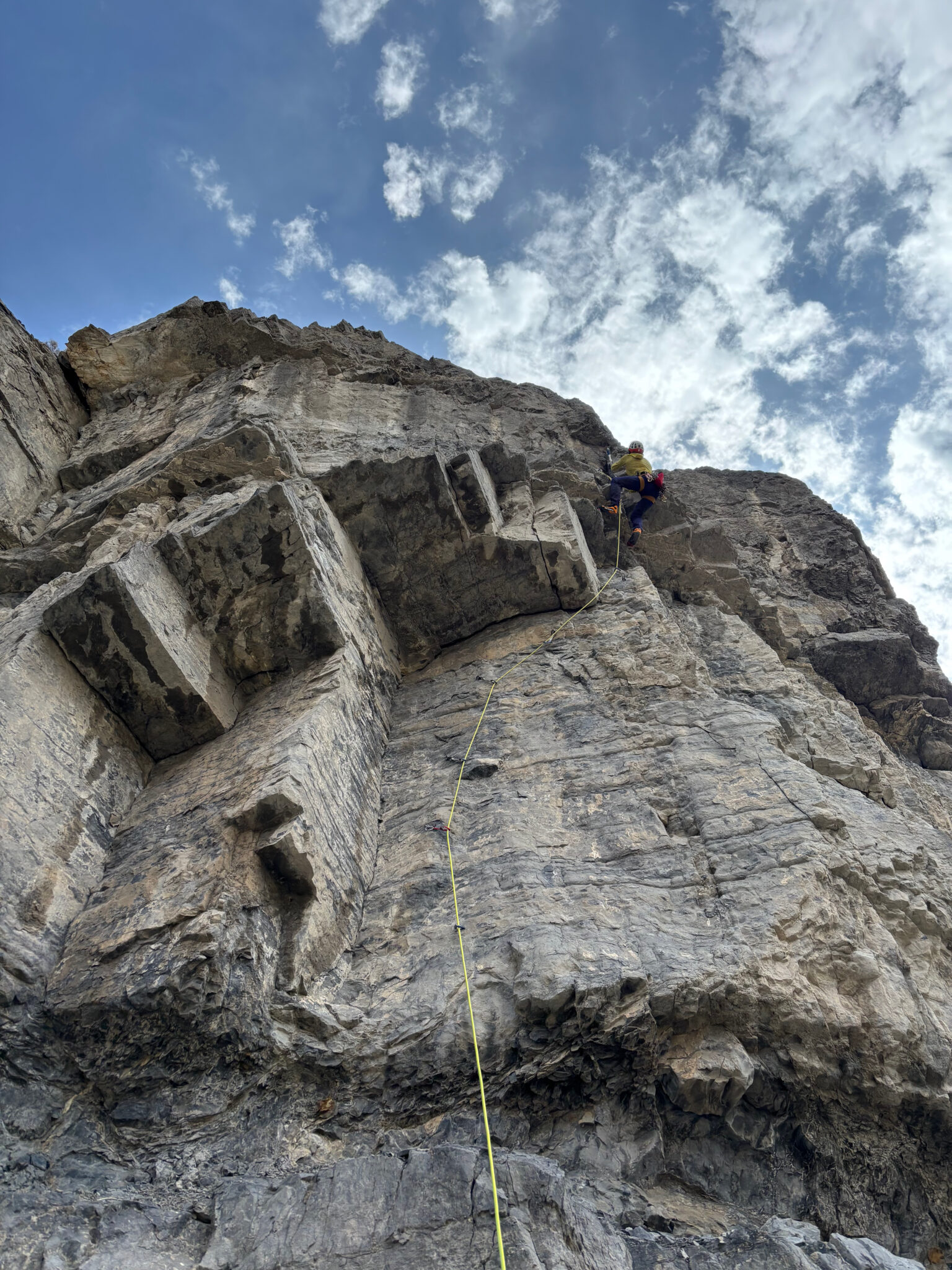
Pitch 8 of the Penitent Path. Photo credit: Sean McLane
Pitch 10 kicked my butt. Graded at D7, it’s actually a 5.11 crack that was awkward to navigate in golf gloves and crampons. I made it up maybe two bolts — and it was a desperate squeeze — before taking up on the rope and having Sean take the lead. While following, I will admit to pulling on some bolts to ascend. After making so many compromises in style, I’m disappointed that I did not even manage to free each pitch of the Penitent Path.
The final pitches go at D7 and D8. I managed to lead each pitch cleanly, but gratefully accepted some beta from Sean. I was pretty tired at this point so topping out on the route was a massive relief. Sean said that pitch 12 was his favorite and I have to agree. The exposure you get on the route combined with the steep pumpy climbing 12 pitches up makes for quite the experience. At the top was a chalice and a bottle of Jack Daniels. Unfortunately I was not worthy and will have to come back another time to drink from the cup — no eternal onsights today.
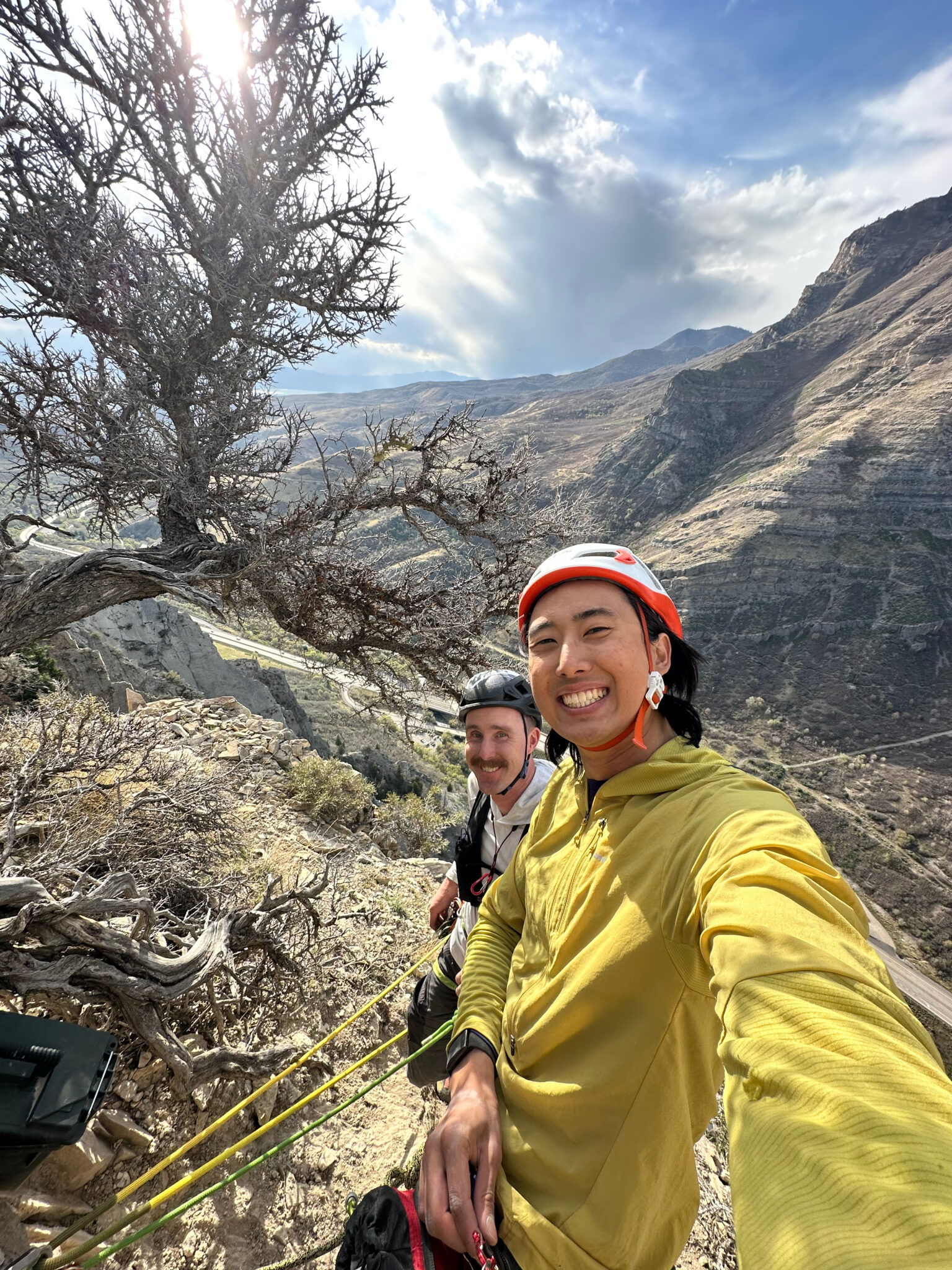
At the top (thankfully) of the Penitent Path.
Overall, I had mixed feelings about my time on the Penitent Path. On one hand, I got to share an incredible experience on the route with Sean — picking his brain on pursuing alpine climbing at the belay stations. On the other hand, I made a number of compromises on style and did not adequately prepare myself for 12 pitches of climbing. If I were to properly prepare myself for this route, I would have spent more time trying to onsite routes in the D7-9 range while also prioritizing a larger volume of climbing. To onsite the Penitent Path was an audacious, partially ego-driven goal. I think that there was a large gap between the magnitude of this goal and my actual experience level — this is certainly not a mindset I will be applying in consequential alpine terrain.
03 Epilogue
My drytooling season has now concluded and I’m looking forward to pulling (and jamming) some rock with my hands for a change. The Penitent Path took a lot out of me, and I needed nearly a week to properly recover and get to a point where I started feeling some level of physical normalcy. In the last couple weeks, I’ve managed to visit Moab, Indian Creek, and Joshua Tree — not too shabby I think… The next stop is Yosemite where I hope to put some solid time into becoming a better rock climber.
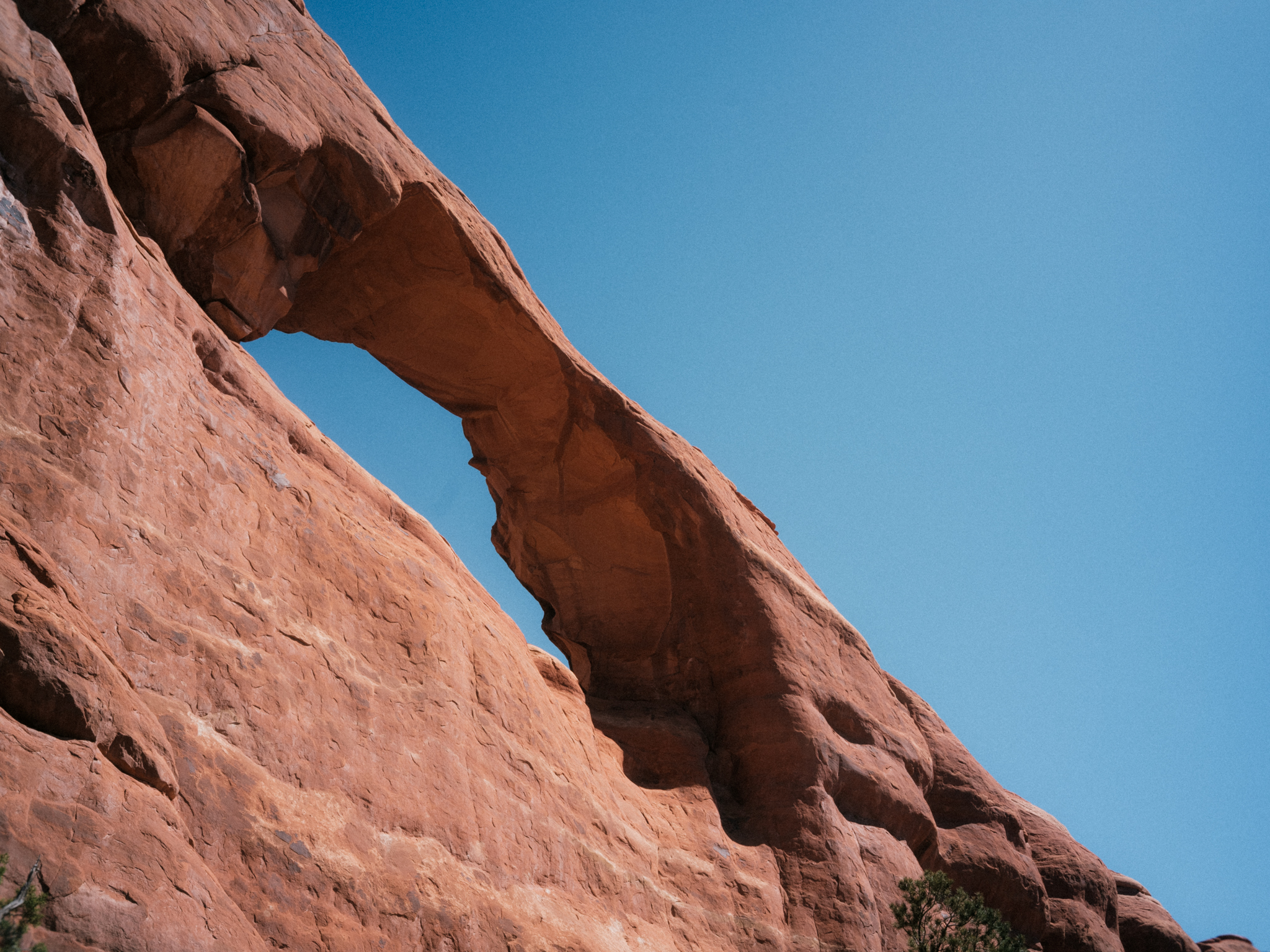
A sneak peak of Moab.
Leave a Reply